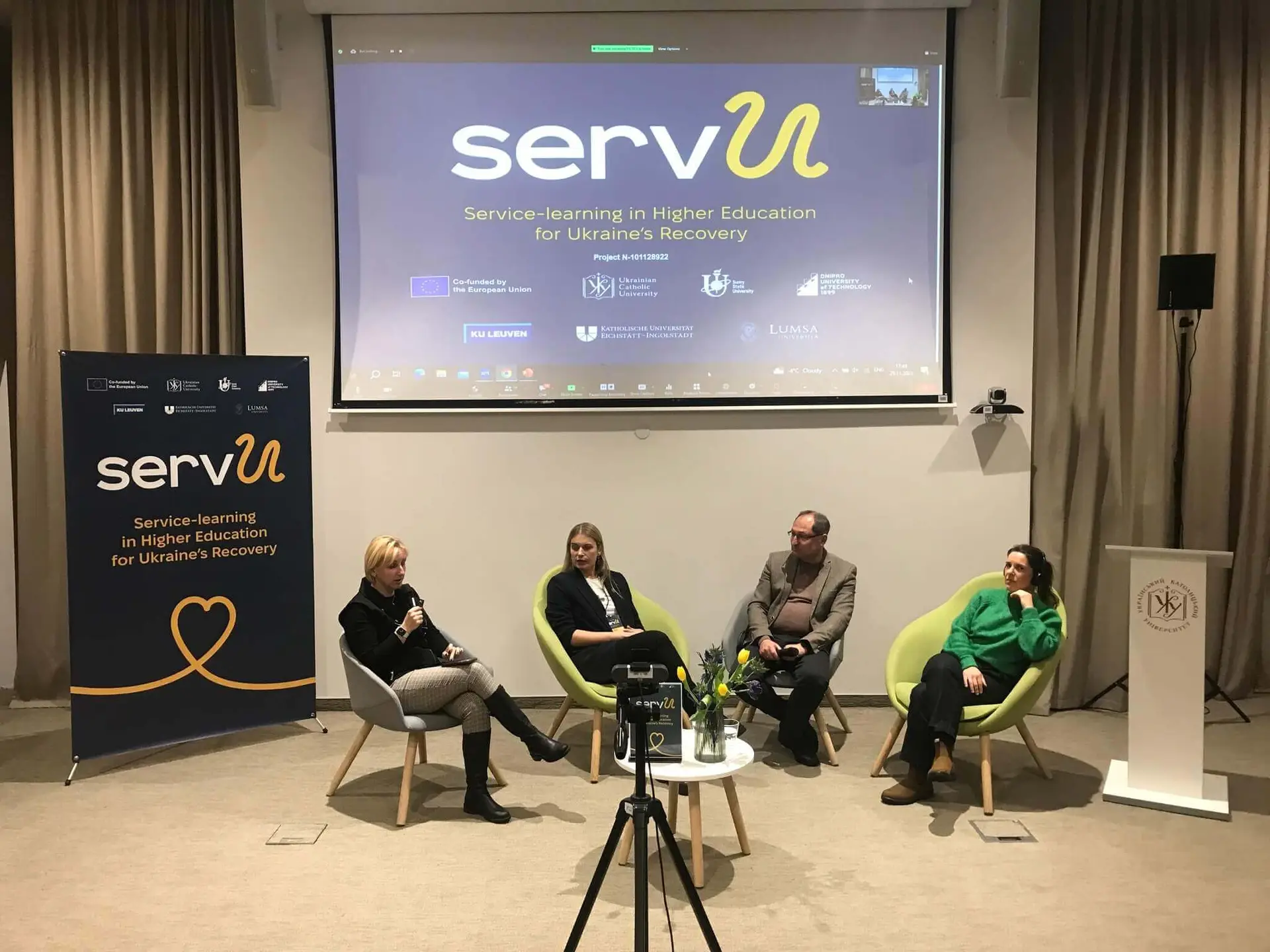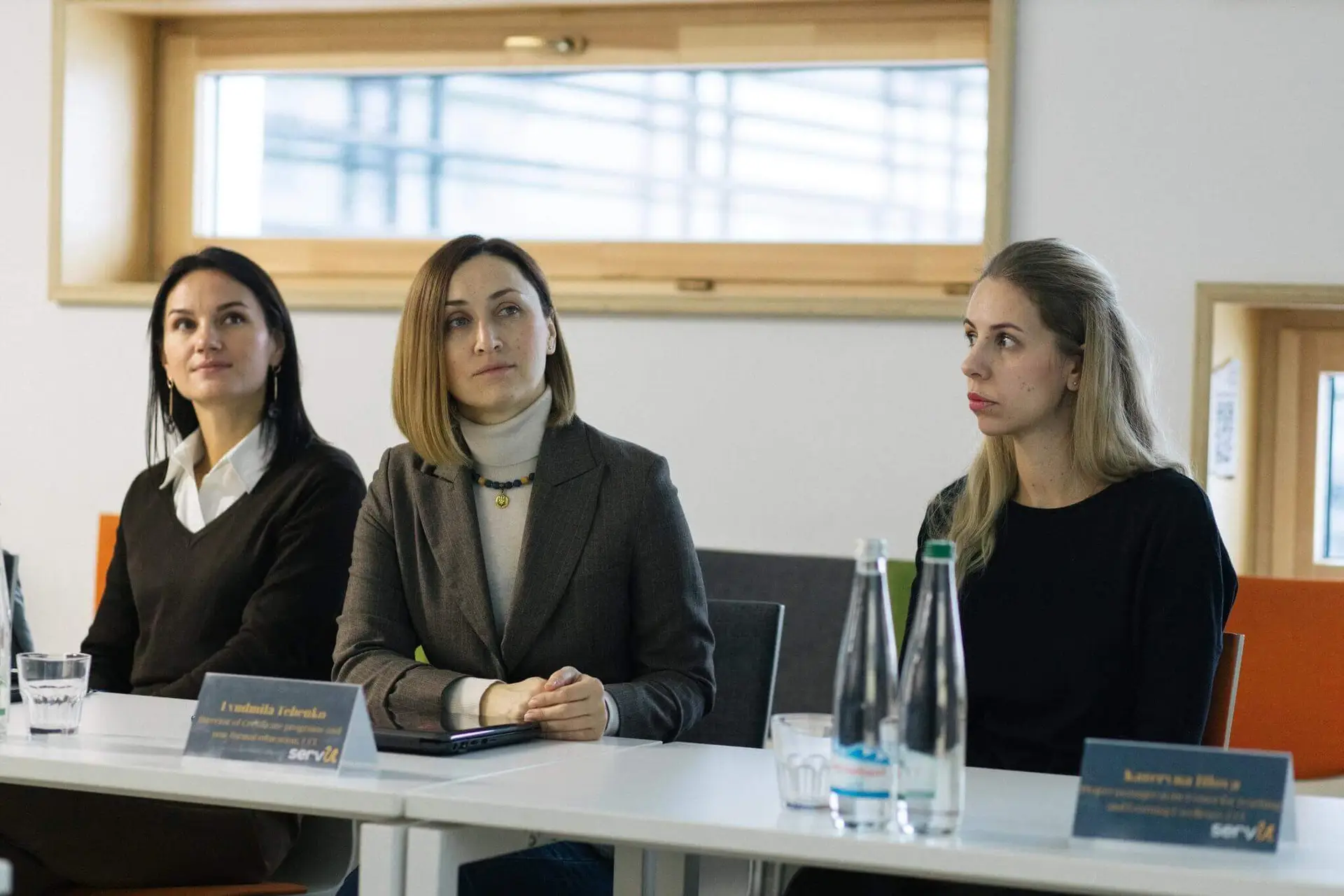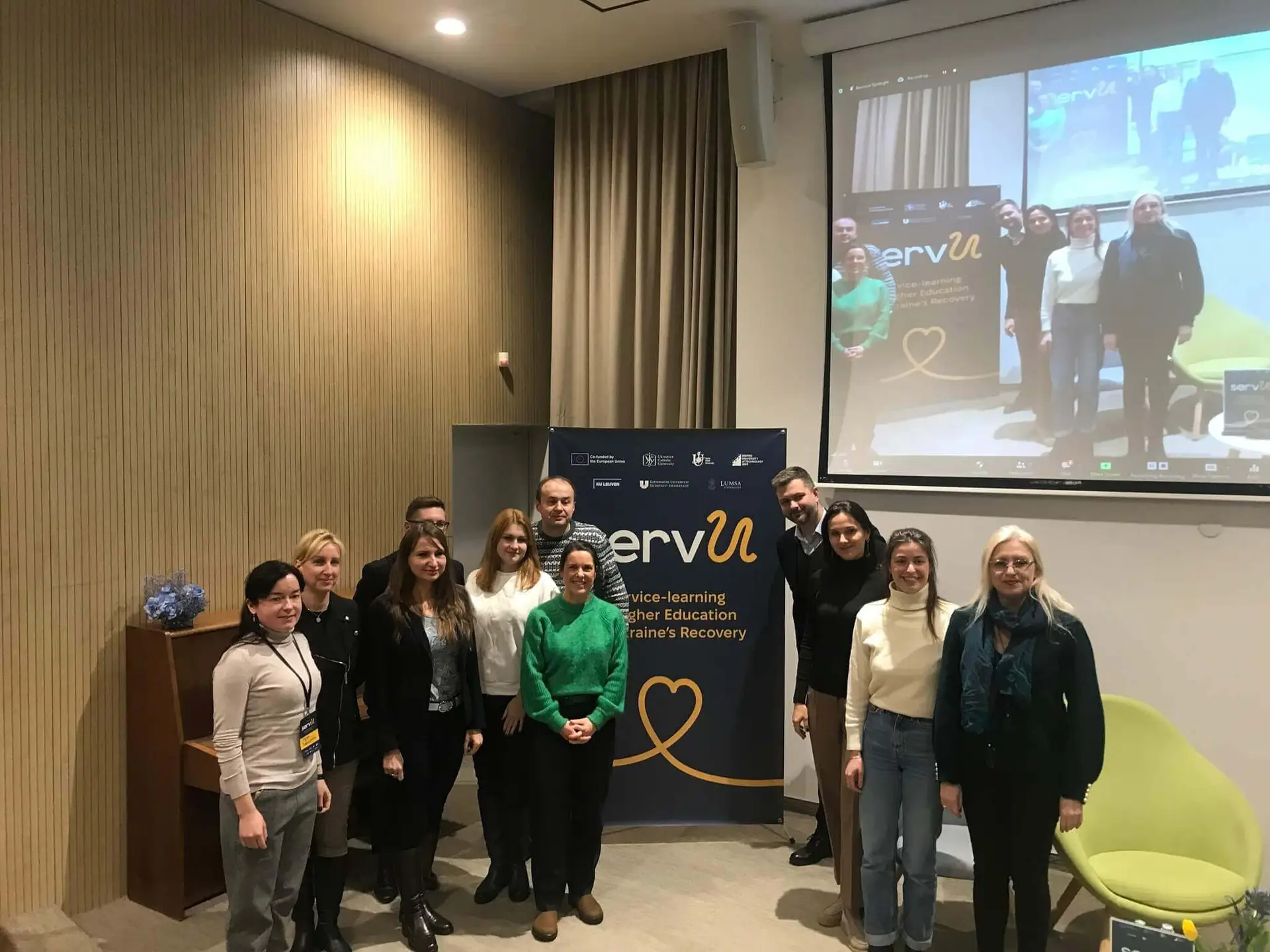



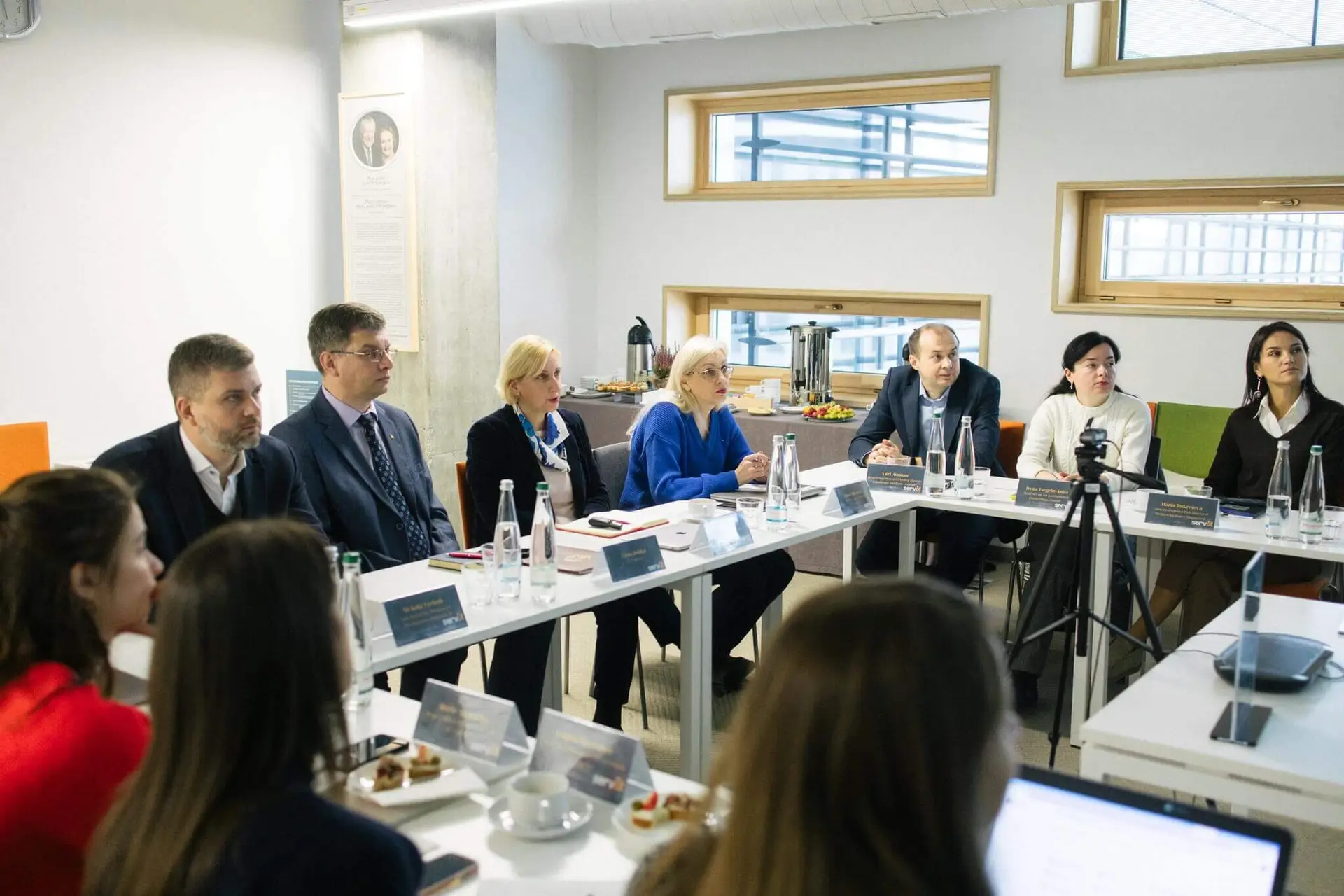
The three universities of the Alliance participated in a three-day conference “Service-Learning for Reconstruction in Ukraine,” which concluded today and took place within the ServU project.
On the first day of the conference, a presentation of the ServU project took place, aimed at developing service-learning in Ukrainian universities. This project will last for 32 months, during which collaborative work with local communities is also planned.
The collaboration between universities and communities through service-learning was also the topic of a panel discussion on the second day of the conference. On this day, Dmytro Sherengovsky, Vice-Rector for Outreach and Social Engagement at UCU, spoke more about the social engagement of universities, emphasizing that universities, communities, professors, or students should not individually address common challenges and problems but together be co-creators of these processes and changes.
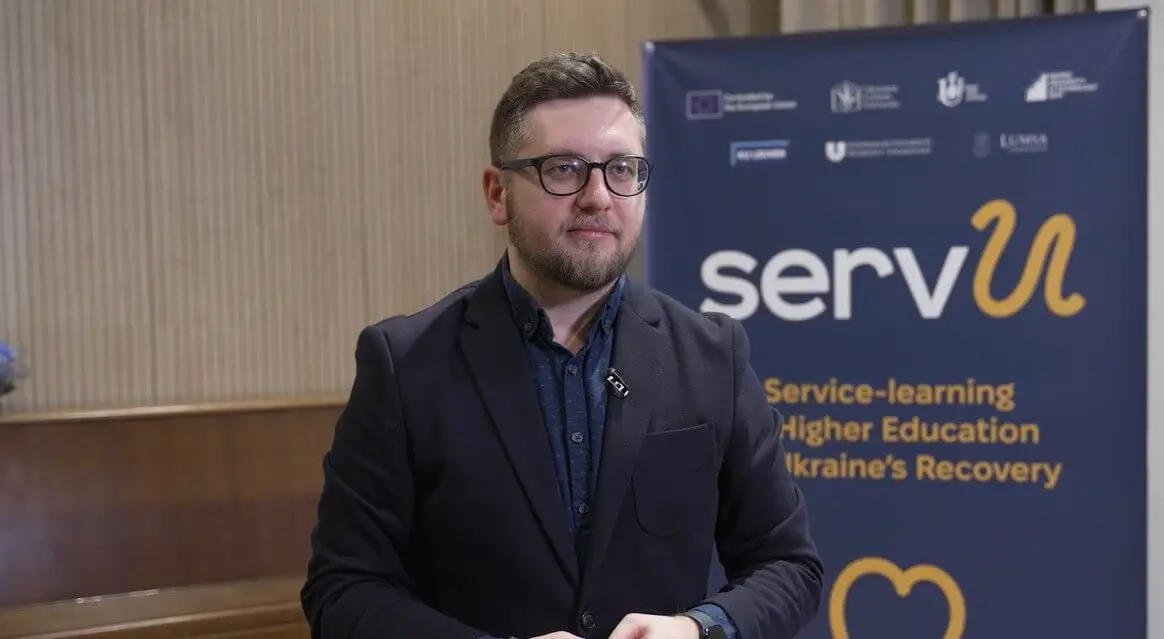
Additionally, international partners from KU Leuven (Belgium), Università LUMSA (Italy), and Katholische Universität Eichstätt-Ingolstadt (Germany) shared their experience in implementing service learning. Each of these educational institutions offers courses and programs for teachers and students that teach and help implement service-learning projects. Many of these projects involve working with schools, charities, businesses, people in difficult life circumstances, or troubled teenagers and are often international in nature.
On the final day of the conference, representatives from Sumy State University, Ukrainian Catholic University (UCU), and Dnipro University of Technology shared their own examples of service-learning projects and expressed their desire, within the ServU project, to systematize their activities in service-learning and develop specific programs or courses that could be further used to develop this educational approach.
The ServU project is implemented within the Erasmus+ initiative with the financial support of the European Union. The material represents the position of the ServU project and does not necessarily reflect the position of the European Union.